

Monster: The Lizzie Borden Story certainly doesn’t go for a simple ending. Netflix’s fourth season of Ryan Murphy and Ian Brennan’s true-crime anthology takes the infamous Lizzie Borden case and turns it into something much more complicated than a straightforward murder mystery. Ella Beatty plays Lizzie, the Massachusetts woman accused of killing her father, Andrew Borden, and stepmother, Abby Borden, while Sarah Paulson appears as another notorious killer, Aileen Wuornos. By the time the finale arrives, the show has moved well beyond the question of whether Lizzie committed the murders and is more interested in what she does after getting away with them — and why her story eventually becomes connected to Wuornos.
How Does Lizzie Get Away With Killing Andrew and Abby?
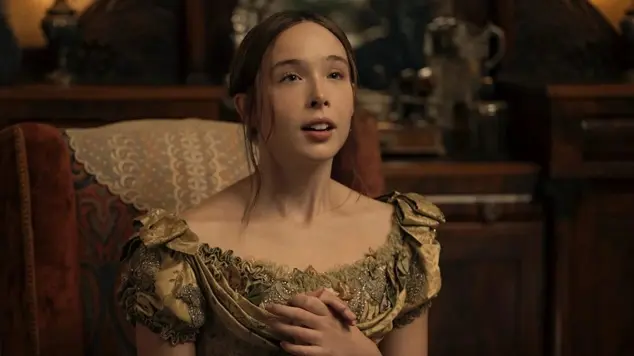
The series gives a much more definite answer to the Borden murders than the real historical record ever could. In Monster, Lizzie and Bridget Sullivan, the family’s maid and Lizzie’s secret lover, are responsible for killing Andrew and Abby. Their first plan is to poison the couple by tampering with their oysters, but that attempt doesn’t go as expected, leaving the two women to take a much more violent approach. They eventually use an axe to kill Andrew and Abby, and once the murders are over, Lizzie and Bridget are left scrambling to clean up the evidence before anyone can connect them to what happened.
One of the biggest problems for the prosecution is that suspicion isn’t the same thing as proof. Lizzie’s story about what she was doing around the house is far from convincing, there are questions about a possible financial motive, and witnesses see her burning a dress after the murders. Still, the authorities can’t produce the kind of definitive evidence that would make the case impossible to dispute. The murder weapon can’t be conclusively connected to Lizzie, while the remains of the burned clothing don’t give the prosecution the clear forensic evidence it needs. The whole case ends up resting on a collection of suspicious details rather than one piece of evidence that completely settles everything.
That gives Lizzie an opening, and she knows exactly how to use it. With help from actress Nance O’Neil, she carefully presents herself as a delicate and respectable woman who simply doesn’t fit the image of someone capable of committing such a brutal crime. It’s a particularly important part of the show’s version of the trial because Lizzie isn’t just defending herself against the evidence. She’s playing into the expectations of the men judging her, essentially making them believe that a wealthy Victorian woman like her couldn’t possibly have carried out a double murder.
Emma Borden also ends up playing an important role in saving her sister. Even though the relationship between Emma and Lizzie is far from perfect, Emma testifies on Lizzie’s behalf and claims that she was actually the one who told Lizzie to burn the dress. She also admits that she had a deeply hostile relationship with Abby, which takes some of the weight away from the prosecution’s argument about family conflict and motive. With the evidence already looking shaky, Emma’s testimony gives Lizzie another layer of protection, and the jury ultimately finds her not guilty.
What Happens to Lizzie After Her Acquittal?

Lizzie may win the trial, but the show makes it pretty clear that an acquittal doesn’t magically give her a normal life back. She inherits money from her father and moves into the enormous Maplecroft with Emma, hoping that the new house can become a fresh start for both of them. Instead, Lizzie quickly discovers that the trial has made her famous in a way that she can’t escape. People know her name, people know the accusations, and the Borden murders have already started turning into the kind of dark legend that will follow her for the rest of her life.
The series leans into that idea when Lizzie realizes just how strange her reputation has become. Stories about the murders are being written, people continue to talk about her, and even children begin dressing up as Lizzie for Halloween. There is something especially unsettling about that scene because Lizzie is still alive and living in the same town, yet her real life has already been turned into a piece of popular mythology. She won in court, but she can’t win against the version of herself that everyone else has created.
Emma eventually reaches her own breaking point. The Borden name has become a burden, and she tells Lizzie that people in Fall River won’t want anything to do with a woman whose family is connected to such a notorious crime. She believes she has no real future there and decides that the only way to escape the scandal is to leave town and create a new identity for herself. Emma’s decision also makes the distance between the sisters even more painful, because Lizzie is increasingly trapped inside the life she has built while Emma is desperate to get away from it.
Do Lizzie and Bridget Ever Get Their Happy Ending?
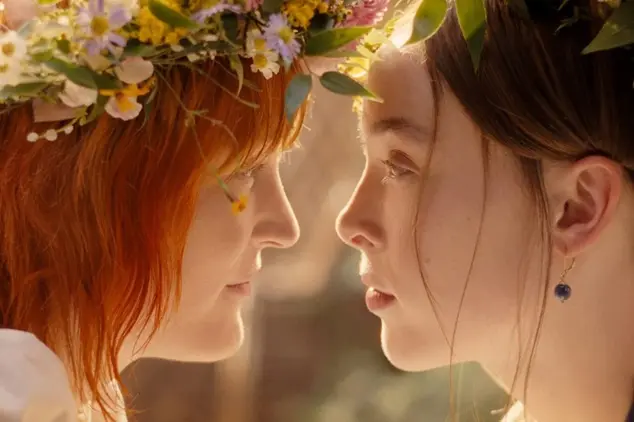
Bridget’s story takes another miserable turn after she leaves Lizzie. She ends up married to an older man and living in a remote mountain cabin, but the marriage is hardly the new beginning she might have hoped for. Her husband doesn’t treat her as an equal and instead expects her to function more like a servant, leaving Bridget isolated and unhappy. At the same time, Lizzie’s enormous home has become its own kind of prison. She has money, space and freedom in theory, but she’s still surrounded by memories of the murders and everything that came afterward.
Eventually, Bridget has had enough. She turns on her husband with an axe, walks away from that life and tracks Lizzie down. When the two women meet again, Bridget suggests that they finally leave the past behind and start over together. Lizzie isn’t able to do that so easily, though. Even after being acquitted, she is still carrying the guilt of what happened to Andrew and Abby, and Bridget understands that simply running away isn’t going to fix that.
Instead, Bridget tells Lizzie that she needs to ask for forgiveness. Lizzie eventually goes into the woods behind Maplecroft and speaks aloud to her dead father and stepmother, confronting the people she helped kill rather than continuing to bury what happened. It’s an important moment for the character because the courtroom cleared Lizzie legally, but it never really cleared her emotionally. Once she finally faces that guilt, she is able to imagine a life beyond the murders.
Lizzie and Bridget eventually find that new purpose through the women’s suffrage movement. They become involved with other women, build new friendships and find a cause that gives them something to care about beyond the Borden murders. The show doesn’t exactly present this as a clean redemption story, because Lizzie and Bridget still have to live with what they did. Instead, it suggests that moving forward means accepting the past rather than pretending it never happened.
What Happens to Aileen Wuornos?

While Lizzie’s story is unfolding, Monster also follows Aileen Wuornos in the 1990s, creating a second storyline that initially seems completely separate from the Borden case. Wuornos becomes fascinated by Lizzie and the mythology surrounding her, particularly the idea that Lizzie could be accused of such horrific murders and still walk out of court a free woman. To Aileen, Lizzie becomes almost a symbol of the kind of escape she desperately wants for herself, even though the circumstances surrounding their lives are obviously very different.
The series uses the connection between them to explore the ways both women have been shaped by violence, abuse and exploitation. Lizzie becomes a historical legend while Aileen becomes a modern true-crime figure, but both eventually find themselves trapped inside stories that are bigger than the people they actually were. That’s what makes the finale’s decision to connect their stories feel less random than it might at first.
Aileen’s real-world fate is much darker than Lizzie’s. She is captured, convicted and sentenced to death, and before her execution she chooses Natalie Merchant’s “Carnival” as the song she wants played during her final moments. As the lethal injection begins, the song starts playing, bringing her story to its final moments.
Why Does Lizzie Appear During Aileen’s Execution?

The finale then takes one last, very strange turn. While Lizzie is attending a suffragette gathering, she suddenly becomes distracted as the same song Aileen chose for her execution begins playing. The show cuts between the celebration and the execution chamber, eventually revealing Aileen opening her eyes and seeing Lizzie and Bridget standing there. They tell her that they’ve come to guide her, and the three women walk together toward a doorway filled with bright white light.
Of course, Lizzie and Bridget aren’t literally there in the execution chamber. The sequence is presented more like a dream, vision or spiritual meeting, giving the finale a way to connect these two very different stories without pretending that the historical women ever actually met. For Aileen, Lizzie represents something almost mythical: another infamous woman whose name became inseparable from murder, but who escaped the death sentence that ultimately awaited her.
The show then cuts back to reality, where Aileen’s body is still lying on the execution gurney as officials and medical examiners confirm her death. It’s a deliberately jarring transition after the strange, almost peaceful image of the three women walking toward the light, bringing the viewer back to the harsh reality of what has just happened.
In the end, Monster: The Lizzie Borden Story isn’t really trying to solve a mystery that history never managed to solve. It creates its own version of the Borden murders and then uses Lizzie’s story to explore guilt, reputation, violence and the strange way notorious women can become legends long after their deaths. The final meeting between Lizzie, Bridget and Aileen isn’t historical, but it fits the show’s larger idea that these women have all been trapped inside stories created by other people. Lizzie gets to walk away from her trial, Aileen doesn’t, and the finale brings them together only after both women have become something larger than the people they once were.