
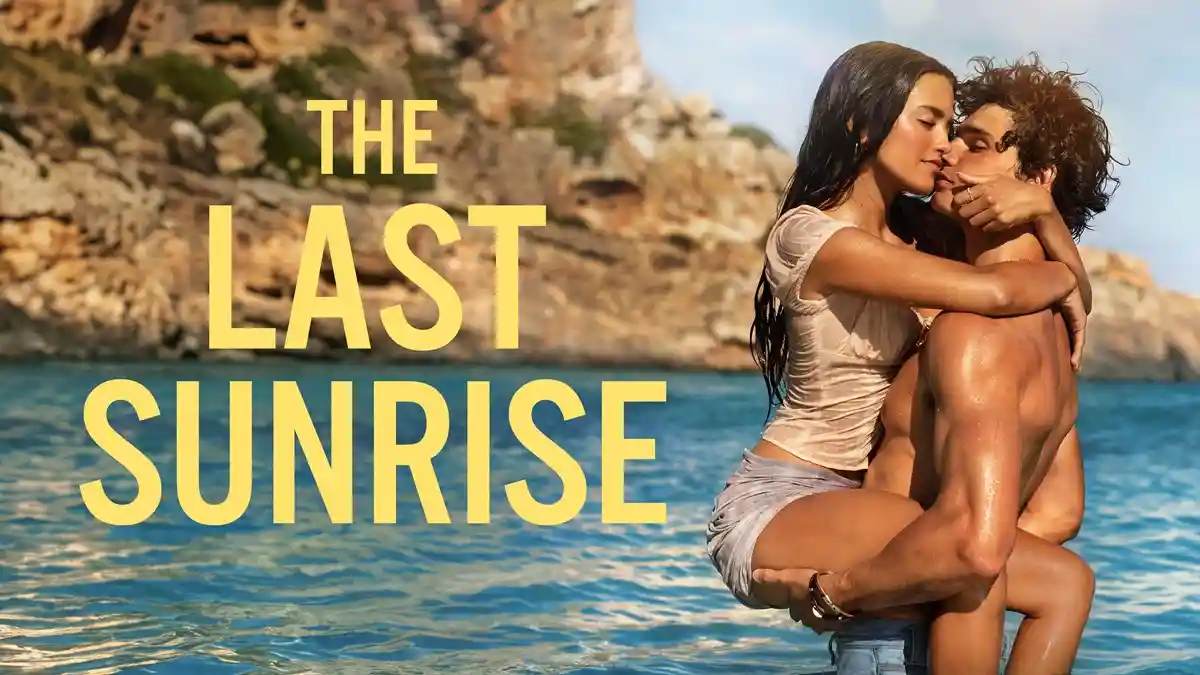
There’s something very familiar about the summer romance setup. You have the beautiful beaches, two attractive young people, long conversations at night, and that feeling that the whole thing probably can’t last forever. The Last Sunrise, the Amazon MGM Studios adaptation of Anna Todd’s bestselling novel, definitely has all of that. Directed by Carlson Young and filmed around Mallorca, the movie looks almost ridiculously pretty at times, with warm sunlight, clear water and the kind of scenery that makes you want to book a holiday immediately. But underneath all that glossy, postcard-like beauty, the film is dealing with something much heavier. At the center of the story is a young woman trying to figure out what kind of life she actually wants while living with a serious chronic illness, and that gives the romance a little more weight than you might expect.
A Summer That Wasn’t Supposed to Change Everything
The story follows Oriah “Ry” Pera (Maia Reficco), a 22-year-old dancer whose life has been heavily controlled by her neurological condition. She deals with seizures, constant medical treatment and a mother who is so worried about her that she often ends up making decisions for her. Her mother, Isolde (Eva Longoria), isn’t exactly trying to be cruel, but her fear of losing Ry has turned into something much more controlling. When Ry is faced with brain surgery that could improve her health but might also affect her memories, she understandably starts to panic. Instead of dealing with the decision head-on, she decides to escape for the summer and joins her mother on a business trip to Spain.
That’s where she meets Julián (Fernando Lindez), a local who works on his family’s fishing boat. Their relationship is probably at its best when the movie keeps things simple. There isn’t an immediate “we’re soulmates” feeling between them. They spend time together, talk, explore Mallorca and slowly get to know each other. Julián introduces Ry to a side of the island that has nothing to do with expensive resorts or corporate trips, while Ry begins to experience what it feels like to make choices for herself rather than constantly thinking about her illness. Of course, things get complicated pretty quickly. Isolde’s business plans threaten Julián’s family and their livelihood, so the romance becomes tangled up with a much bigger conflict involving money, family secrets and competing ideas about what Ry’s future should look like.
The Cast Keeps It From Becoming Too Cheesy
The performances are probably the biggest reason The Last Sunrise works as well as it does. Maia Reficco gives Ry a performance that feels much more vulnerable than the usual troubled-romance protagonist. She wants to experience everything she thinks she has been missing, but there’s always that fear sitting underneath it. Reficco does a good job of showing both sides without making Ry seem either completely reckless or unrealistically brave. You can understand why she makes some of the decisions she does, even when you’re sitting there thinking, “Maybe don’t do that.”
Fernando Lindez is equally effective because Julián isn’t written as some impossibly perfect romantic hero. He’s quieter and more grounded, and his relationship with Ry develops because he actually listens to her. He doesn’t treat her like she’s fragile just because she has a medical condition, which makes their scenes together feel more natural. Eva Longoria also gets more to work with than the standard overprotective-mother role. Isolde can be frustrating, certainly, but her behavior comes from genuine fear. She knows what could happen to her daughter, and that fear has basically taken over her entire life. That makes the conflict between her and Ry much more painful than a simple mother-versus-daughter argument.
Mallorca Becomes Part of the Story
Carlson Young also understands that Mallorca needs to feel like more than a pretty location thrown into the background. The coastline, beaches and open landscapes represent everything Ry wants during this brief period of freedom. There’s a noticeable contrast between those wide, bright spaces and the more enclosed feeling that comes whenever the story returns to her illness and the uncertainty surrounding the surgery. The cinematography leans into that difference without constantly reminding us what it is doing, which is probably for the best. The score from Isom Innis adds to the atmosphere and gives some of the quieter scenes an emotional lift without completely overwhelming them.
The movie does have its weaker spots. At around 107 minutes, The Last Sunrise doesn’t have a huge amount of time to explore every storyline, and the corporate land dispute involving Julián’s family sometimes feels like it’s been squeezed into a movie that really wants to focus on Ry and her emotional journey. Some of the drama can also feel predictable because, well, this is still a summer romance and the genre has certain rules it likes to follow. But the central story holds together. The Last Sunrise isn’t really about finding the perfect person and living happily ever after. It’s more about realizing how uncertain life can be and deciding to actually live it anyway. And underneath all the Mallorca sunsets and romance, that’s what gives the film its heart.