
It has been nearly two decades since Ron Howard’s The Da Vinci Code arrived in theaters, but the movie still has a strange ability to get people talking. Based on Dan Brown’s hugely successful novel, the film mixes famous artworks, religious history, secret societies and a very controversial theory about the Holy Grail. It was always the sort of movie that was going to cause arguments, especially because it takes familiar Christian traditions and turns them into the foundation of a massive conspiracy. The film recently came back into the spotlight after an Italian television broadcast on Rai 2 reportedly cut off just minutes before the climax, leaving viewers without the ending and, naturally, bringing a lot of attention back to what actually happens in the final act.
Uncovering the Real Villain
The final part of The Da Vinci Code finally reveals that Sir Leigh Teabing, played by Ian McKellen, is the mysterious figure known as the Teacher. Teabing has been manipulating events because he wants to find the Holy Grail and expose what he believes is a secret that the Catholic Church has spent centuries trying to bury. Robert Langdon and Sophie Neveu eventually realize what he has been doing, leading to a confrontation in London and one last attempt to solve the cryptex. Langdon figures out that the password is “APPLE,” a reference to Isaac Newton and the famous story of the apple that inspired his thinking about gravity. The clue leads Langdon and Sophie toward Rosslyn Chapel in Scotland, where the mystery surrounding Sophie’s family finally begins to make sense.
What Sophie Learns About Her Family
The trip to Rosslyn Chapel turns the story from a straightforward treasure hunt into something much more personal for Sophie. She discovers that Jacques Saunière, the Louvre curator whose murder started the entire chain of events, was not actually her grandfather in the way she had always believed. He had been protecting her and was deeply involved in the secret that her family had been carrying for generations. The much bigger revelation is that Sophie is supposedly a direct descendant of Jesus Christ and Mary Magdalene, whose bloodline was protected by the Priory of Sion. In the movie’s version of history, Mary Magdalene was not simply one of Jesus’ followers but his wife and the mother of his child, making her descendants the surviving bloodline of Christ. It is a huge revelation, and honestly, this is the point where the movie goes from a fairly complicated mystery into full-blown conspiracy territory.
The Holy Grail Isn’t What You Think
The central twist behind The Da Vinci Code is that the Holy Grail isn’t actually a cup. The story treats the Grail as a symbol for Mary Magdalene herself and the bloodline she supposedly carried. The word “Grail” becomes connected to the idea of a vessel, with Mary being the person who carried Jesus’ bloodline forward. According to the movie’s mythology, the early Church deliberately suppressed Mary’s importance and the existence of her descendants because acknowledging that history would undermine the religious authority that had developed around Jesus. That’s the controversial idea at the heart of the entire story, and it’s also the reason the film attracted so much criticism when it was released. The movie isn’t simply asking where an ancient cup might be hidden; it is suggesting that the real secret has always been a person and a family line.
Where Is the Grail?
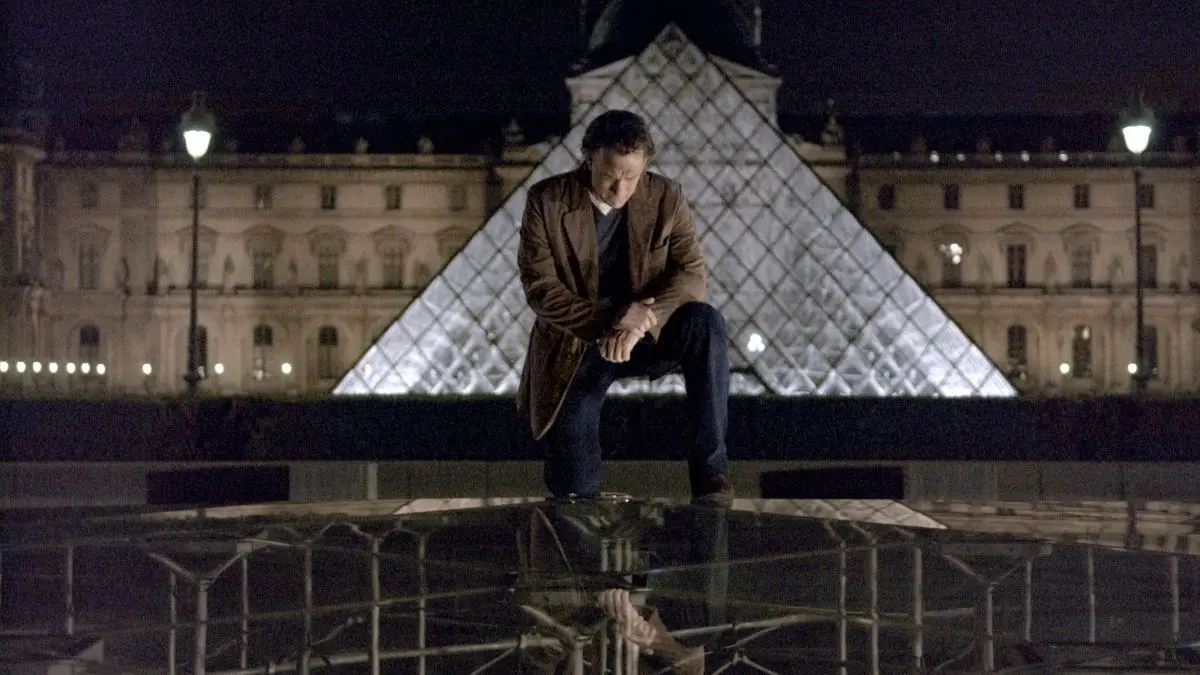
Even after Sophie discovers the truth about her family, Langdon still has one final piece of the puzzle to work out. He eventually returns to Paris and starts following the clues back to where the whole story began: the Louvre. He realizes that the mysterious Rose Line and the various symbols have been pointing him toward the museum all along. The final location is beneath the Louvre’s famous glass pyramid, where Langdon discovers the hidden resting place associated with Mary Magdalene. The movie doesn’t end with him pulling a priceless cup out of a secret room or taking the Grail away with him. Instead, he finds the symbolic resting place of Mary Magdalene, which fits the film’s argument that the Grail represents her and the bloodline connected to her. It also gives the whole story a neat circular structure because everything began with Saunière’s murder inside the Louvre and ultimately brings Langdon back there.
How Much of the Story Is Actually True?
This is probably the most important distinction to make when discussing the ending. The Da Vinci Code uses plenty of real things—Leonardo da Vinci’s paintings, historical locations, religious figures and genuine pieces of European history—and mixes them with fictional theories. That combination is part of what made the story so effective, because the real details give the conspiracy an air of credibility. But the central claims are not accepted historical facts. There is no reliable historical evidence that Jesus and Mary Magdalene were married or had children, and there is no established evidence of a secret bloodline of Christ being protected by an organization such as the one depicted in the story. Mary Magdalene was certainly an important figure in early Christianity and is mentioned in the New Testament, including the accounts of Jesus’ Resurrection, but the rest of the bloodline theory belongs to Dan Brown’s fictional story rather than established history.
Why the Ending Remains So Controversial
Whether you believe any of the theories is almost beside the point when it comes to the movie as a thriller. The Da Vinci Code works by taking things people recognize from history and religion and asking, “What if we’ve been looking at all of this the wrong way?” The final reveal about Mary Magdalene gives the mystery a bigger meaning than simply finding an ancient artifact, turning the Grail into a symbol of forgotten history, religious power and the possibility that an entire part of the past was deliberately erased. Some viewers find that idea fascinating, while others think the movie takes its fictional history far too seriously. Either way, the ending certainly did its job. It gave audiences something to argue about, and nearly 20 years later, people are still having those arguments.